Description
The Division of Radiation Therapy offers state-of-the-art cancer treatments tailored to the specific characteristics of each patient and his or her disease. The availability of advanced technologies enables high precision, greater effectiveness and less impact on surrounding healthy organs.
What is radiotherapy
Radiation therapy is a non-invasive cancer treatment that uses ionizing radiation to target and destroy cancer cells. It is an outpatient treatment: it does not require hospitalization, is not painful, and, in the vast majority of cases, does not require anesthesia or specific medications.
Treatments are tailored to the specific characteristics of the disease and are performed using advanced technologies, which ensure high precision, greater effectiveness, and less impact on surrounding healthy tissue than in the past.
Treatment pathway
The process is divided into stages that guide the patient from the initial evaluation through the conclusion of treatment:
- Consultation visit: The radiation oncologist assesses whether treatment is indicated and explains the goals, duration, procedure, and possible side effects;
- Centring CT scan: In the days that follow, the patient undergoes a simulation CT scan, which allows the doctor to precisely map out the tumor and the nearby organs that need to be protected;
- Planning: Based on these images, a personalized treatment plan is developed;
- Treatment sessions: The number of sessions varies depending on the type of radiation therapy, ranging from a minimum of 1–7 for short courses to a maximum of 35, administered daily from Monday through Friday. Each session lasts only a few minutes.
After each session, the patient does not remain radioactive and can therefore continue to carry out their daily and social activities normally. Depending on the physical condition, he may also devote himself to work, sports or other regular commitments.
Side effects
When they occur, side effects are generally easy to manage and vary depending on the anatomical area being treated. If you experience any symptoms, your doctor can prescribe medication or recommend strategies to alleviate them.
A multidisciplinary team
Radiation therapy relies on a multidisciplinary team of diverse professionals:
- a radiation oncologist, who determines the need for treatment and oversees the entire process;
- medical physicists, who develop treatment plans based on simulation CT images;
- radiation therapy technicians, who administer treatment sessions while ensuring proper patient positioning and performing the quality controls necessary for the daily validation of radiation therapy;
- Specialized nurses who provide support during the preparatory stages, assist during treatment, and manage any dressings or clinical needs.
This team accompanies the patient every step of the way, from the first visit to the final evaluation, clearly explaining each step and carefully monitoring the occurrence of possible side effects.
Activities
Among the techniques available:
- 3D conformal radiation therapy (3DCRT) and intensity-modulated radiation therapy (IMRT) with image-guided radiation therapy (IGRT), delivered using two Tomotherapy systems and a TRUE BEAM linear accelerator, which enable the delivery of highly collimated and stereotactic treatments;
- High-dose-rate (HDR) brachytherapy, which involves placing radioactive sources directly within the tumor itself.
Contact
- We are on the ground floor
- Tel. 011 9933774
- Email: reparto.radioterapia@inoc.it
How to book
Find out all the ways you can access services through the National Health Service, privately and behind health funds and insurance coverage.
Équipe
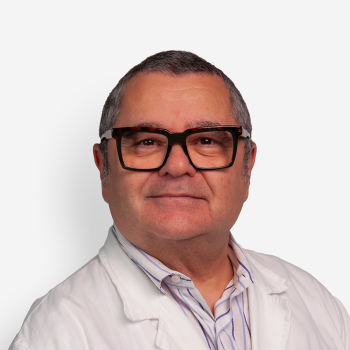
Dr.
Marco
Gatti
Physician
Radiotherapy
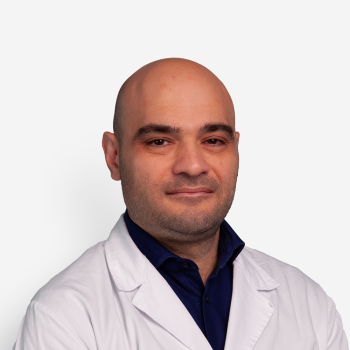
Dr.
Gaetano
Belli
Physician
Radiotherapy
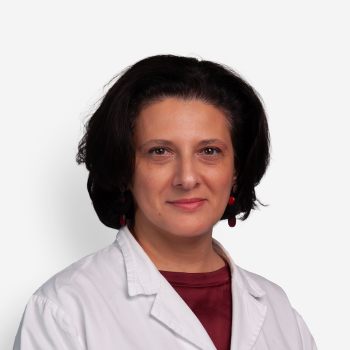
Dr.
Gabriella
Cattari
Physician
Radiotherapy
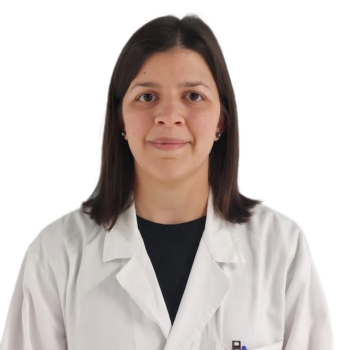
Dr.
Chiara
Cavallin
Physician
Radiotherapy
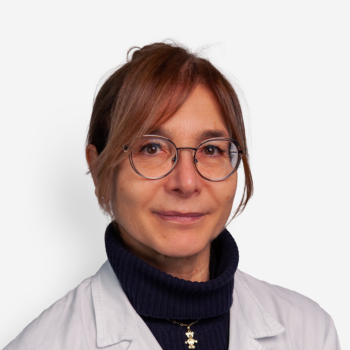
Dr.
Elena
Delmastro
Physician
Radiotherapy
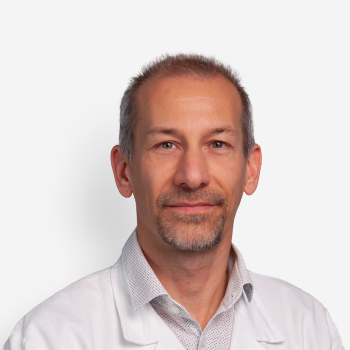
Dr.
Andrea
Galla
Physician
Radiotherapy
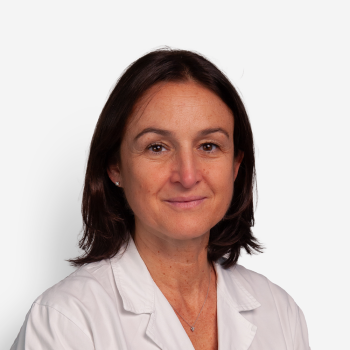
Dr.
Alessia Silvia
Guarneri
Physician
Radiotherapy

Dr.
Antonia
Saltine
Physician
Radiotherapy

Dr.
Angelisa
Vella
Physician
Radiotherapy

Dr.
Giovanni
Penduzzu
Radiology technician
Radiotherapy