Immunotherapy: what it is, how it works, side effects
BY.

Prof.
DARIO SANGIOLO
Oncologist, Associate Professor of Medical Oncology at the Department of Oncology, University of Turin and Director of the Division of Oncology Immunotherapy at INOC – Istituto Nazionale Oncologico Candiolo
In the course of cancer treatment, it may happen that immunotherapy is also proposed by the doctor. There are many questions, doubts, and even false myths circulating about immunotherapy. With the help of the expert, we shed light on this innovative cancer therapy, which will be increasingly central to the treatment of different types of cancer.
Visita il profilo
What is immunotherapy, and how does it work?
Immunotherapy is an innovative anticancer strategy that harnesses, enhances, and redirects the activityof the immune system against cancer cells. In particular, the forms of immunotherapy most widely used in the clinic today help the immune system recognize the
tumor and eliminate it.
How does immunotherapy affect the tumor?
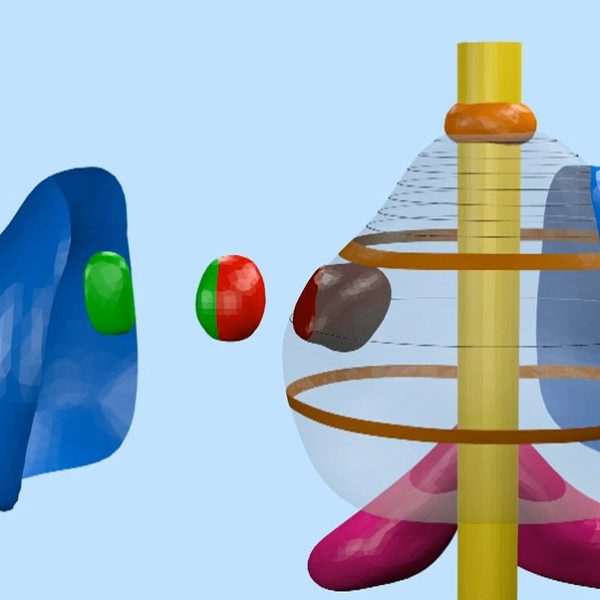
Many tumors are able to “turn off” the immune system by blocking lymphocytes through immunological brake signals. The most widely used immunotherapy drugs, called immune checkpoint inhibitors, remove these brakes, leaving the lymphocytes free to act against the tumor.
Does immunotherapy “cure” the tumor or keep it under control?
Immunotherapy can do both: in some cases it can lead to complete and lasting responses, in others to disease control, and, unfortunately, in some situations it is not effective. Current research challenges are aimed at understanding, predicting and modulating the reasons for these differences.
How is it different from chemotherapy?
Chemotherapy directly targets dividing cells;immunotherapy acts on the immune system, reactivating its ability to eliminate cancer cells.
To what types of cancer is it applicable?
The first applications, about 15 years ago, were in melanoma; later it gradually expanded to different types of cancer. Currently, the possibilities for use are continuously expanding and we find, for example, indications in lung tumors and in
Neoplasms of theurogenital and gastroenteric systems.
Is it suitable for all patients?
No, there are specific contexts and situations, related to the characteristics of the tumor or the patient, that physicians must evaluate before placing an indication for immunotherapy.
Why is it proposed to some patients and not to others?
It depends on clinical and biological criteria that are evaluated by physicians in accordance with guidelines. Just as an example, some autoimmune diseases present may increase the risk of toxic effects or, again, some cancers may not have characteristics that would
Be recognized and attacked by the immune system.
Can immunotherapy be done together with chemotherapy or radiation therapy?
Yes, in some cases associations are possible and, indeed, may act synergistically.
How is it administered?
Intravenously, but recently subcutaneous forms are also being evaluated.
How often is it done, and for how long?
It depends on the drug and the type of tumor. In general, there are biweekly, triweekly or monthly administration schemes.
Is hospitalization necessary?
No, these are usually therapies administered on an outpatient basis.
Can one continue to work or carry out normal daily activities?
Normally yes; of course it depends on the patient’s clinical condition.
How effective is immunotherapy?
It depends on the tumor and clinical situations. In some contexts, as mentioned above, it has been shown to cure cancers even in advanced stages; in others it may allow control of the disease and, unfortunately, may not be effective in some cases.
After how long do you see the first results?
Generally after a few weeks. The timing of the results depends precisely on the fact that its action takes as long as it takes for the immune system to be activated.
What happens if immunotherapy does not work?
It depends a lot on the type of tumor and clinical condition. In general, alternative strategies are considered whenever possible.
What side effects can immunotherapy give?
Possible side effects are related to excessive activation of the immune system, which may mistakenly attack healthy organs in addition to cancer cells. These are therefore effects termed “autoimmune.” Examples may include skin rash, colitis , and some inflammation
Of theendocrine glands.
Does immunotherapy make hair fall out?
No, and it is usually very well tolerated.
Are the side effects the same for everyone?
No, most patients do not manifest any major complaints. Individuals with underlying autoimmune diseases are potentially at greater risk of experiencing side effects. Research is currently trying to understand what factors are associated with different risks and the occurrence of adverse events.
Can side effects appear even after a long time?
Yes, the timing of possible adverse events is variable. In some cases they may occur early, while in other situations they may be more subtle and appear slowly and over a period of time. In case of new symptoms, it is always recommended to consult with your doctor.
Is immunotherapy better tolerated than chemotherapy?
In most cases, yes; of course, this is not generalizable, and it should be noted that today even chemotherapy regimens are generally very well tolerated.
Can I travel during the treatment?
In general, yes, there are no particular limitations.
Are there any restrictions on diet, physical activity, or vaccinations?
In general, no; in most cases one can continue to lead a normal life.
Does immunotherapy “strengthen” the immune system?
Not exactly: it modulates it. It removes the brake, that is, the tumor-induced inhibition of the immune system, making the lymphocytes free to attack the neoplastic cells.
If I have no side effects, does that mean it is not working?
No, the effectiveness of treatment is monitored with clinical visits and instrumental examinations (e.g., CT scan, MRI).
Is this an experimental therapy?
No, immunotherapy understood as immune checkpoint inhibitor drugs (e.g., anti-PD-1 or anti-PD-L1) is now approved in many cancer settings. New applications or schemes are also part of experimental clinical protocols.
Is it a very expensive therapy?
The costs of these modulators of the immune system are high. In settings where there is already an established indication, the costs are borne by the National Health Service.