The Thyroid in Women: The 10 Most Frequently Asked Questions

Dr.
George Borretta
Endocrinologist on the OtolaryngologyTeam
The clinical statistics speak for themselves: women are significantly more likely to highest, compared to men, to develop thyroid disorders throughout one’s life. This gland plays a key role in regulating physical and mental well-being, influencing everything from daily energy levels to fertility. In this article, we answer the 10 most frequently asked questions to shed light on prevention, diagnosis, and treatment.
Visit profile
What is the thyroid gland, and what role does it play?
The thyroid gland is a small, butterfly-shaped organ located at the base of the neck. Despite its small size, it acts as the body’s true “powerhouse.” Its main function is to produce thyroid hormones, known as T3 and T4, whose secretion is finely regulated by TSH, a hormone produced by the pituitary gland in the brain. These hormones directly influence metabolism, controlling the rate at which the body burns calories, heart rate, and body temperature regulation. Proper thyroid function is therefore essential for maintaining the body’s overall balance.
The thyroid can be thought of as the body’s thermostat: if it doesn’t function properly, the entire body is affected, from body temperature to mood.
Why do thyroid disorders affect women more than men?
The incidence of thyroid disorders is significantly higher among women. Just consider that, with regard to thyroid cancers, an estimated 11,378 new cases were diagnosed in 2024: 3,056 among men and 8,322 among women (Source: AIOM – Cancer Statistics in Italy 2025). This vulnerability is primarily linked to the complex relationship between estrogen and the thyroid, as female hormones constantly interact with the gland’s cells. Furthermore, women have a greater genetic predisposition towardthyroid autoimmunity, a condition in which the immune system mistakenly attacks the gland, as occurs in Hashimoto’s thyroiditis.
A woman’s predisposition is a biological fact; for this reason, women with a family history of the condition are advised to undergo preventive screenings starting at a young age.
At what stages of life are women most at risk?
The hormonal fluctuations typical of female biology make certain stages of a woman’s life particularly critical. Puberty places significant strain on the thyroid; the gland must respond to new physiological stimuli that can sometimes trigger imbalances in hormone production. Later, during pregnancy, the thyroid faces an extraordinary workload that can continue into the postpartum period. Finally, the thyroid gland goes through a delicate period during menopause: the drop in estrogen can disrupt the gland’s balance and cause symptoms—such as fatigue and hot flashes—that are similar to those of thyroid dysfunction. This similarity often makes it difficult to distinguish whether the discomfort is due to menopause or an actual thyroid problem.
Excessive fatigue and brittle hair and nails should not be underestimated: often, they are not just due to “stress,” but are signs of a thyroid disorder that requires medical evaluation to prevent the imbalance from worsening.
What are the most common thyroid disorders in women?
The most common problems range from functional imbalances to structural changes in the gland.Hypothyroidism, often caused by Hashimoto’s thyroiditis, occurs when the thyroid produces fewer hormones than necessary. Conversely,hyperthyroidism, as seen in Graves’ disease, indicates excessive hormone production. Many women also experience thyroid nodules or a general enlargement of the gland known as a goiter. Finally, postpartum thyroiditis—a temporary inflammation that affects new mothers in the months following childbirth—is not uncommon.
Most thyroid nodules are benign, but it is essential to monitor them over time with the help of a specialist.
Can thyroid disorders be prevented?
The prevention of thyroid diseases is based primarily on proper nutrition and healthy habits. The most effective strategy is iodine prophylaxis, which involves regularly using iodized salt in cooking to ensure the gland gets the right “fuel.” In addition to diet, it is essential to maintain a lifestyle that excludes smoking, which is considered a risk factor for the development of goiter.
Iodized salt is a simple, everyday habit that can make a significant difference to thyroid health.
How are thyroid disorders diagnosed?
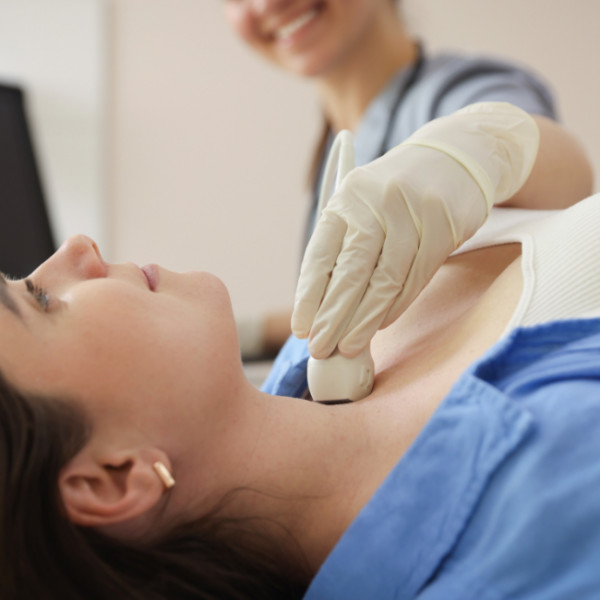
The thyroid diagnostic process usually begins with simple blood tests to measure TSH, T3, and T4 levels, as well as testing for anti-TPO and anti-thyroglobulin antibodies to rule out autoimmune causes. If blood test results are abnormal or a swelling is felt in the neck, the specialist will ordera thyroid ultrasound, a painless test that evaluates the gland’s structure. If suspicious nodules are present,a thyroid fine-needle aspiration biopsy is performed for a detailed cellular analysis. These thyroid screening tools now make it possible to identify any issues with extreme precision.
What are the main treatment options?
Once a diagnosis has been made, treatment for hypothyroidism involves taking levothyroxine, a synthetic hormone that very effectively replaces the missing hormone. As for the treatment of hyperthyroidism, the initial approach involves medications such as methimazole to slow down the gland, or radioiodine therapy. In cases where there is excessive enlargement or a suspicion of malignancy, the definitive solution is thyroid surgery, known as a thyroidectomy, which involves the partial or total removal of the gland.
If you start hormone replacement therapy, consistency is the key to success: taking the medication correctly on an empty stomach helps maintain a good quality of life.
The Thyroid and Pregnancy: What You Need to Know
Pregnancy puts the thyroid through a rigorous test. It is essential to ensure an adequate intake of iodine during pregnancy, since in the first few months the fetus’s thyroid is not yet fully functional and depends entirely on the mother for the development of its nervous system. Untreated hypothyroidism during pregnancy can pose risks to both the mother and the baby, which is why thyroid screening during pregnancy and regular monitoring of TSH levels have become routine tests during pregnancy.
If you’re planning a pregnancy, it’s important to have your thyroid checked before conception to ensure that your hormone levels are optimal from day one.
The Thyroid and Fertility: Is There a Connection?
There is a close correlation between thyroid function and fertility in women, as thyroid hormones directly influence the maturation of oocytes. Conditions such assubclinical hypothyroidism or Hashimoto’s thyroiditis can make conception more difficult or increase the risk of early miscarriage. For this reason, an evaluation of thyroid function is often the first step recommended for women who are having difficulty getting pregnant.
Often, correcting even a mild thyroid imbalance can help resolve the issue and increase the chances of successfully conceiving.
The Thyroid and Body Weight: What’s the Connection?
The relationship between weight and the thyroid in women is one of the most widely discussed topics.Hypothyroidism can cause weight gain not so much due to a massive accumulation of fat, but rather because of a slow metabolism that promotes fluid retention and sluggish digestion. Conversely, weight loss in cases of hyperthyroidism occurs because the body burns energy excessively and uncontrollably. However, restoring proper hormone levels helps normalize weight.