Sarcomas: Why Choose a Specialized Center
BY.
Dr.
Sandra Aliberti
Team Doctori Medical Oncology
When it comes to sarcomas, choosing the right treatment center can be a crucial turning point in the course of the disease. Sarcomas are, in fact, rare cancers, with over 80 different histotypes. Expertise in medical specialties stems from study and the number of patients treated over the course of one’s career: if a clinical condition is rare, building that expertise is more challenging. In this regard, networking around these diseases and participating in dedicated research projects are essential for staying up to date.
View profile
The First Step: The Diagnostic Definition
Many patients arrive at a referral center like INOC after an initial and valuable evaluation conducted elsewhere, often close to home. This is a natural progression, but precisely because of the rarity and complexity of sarcomas, further testing may be necessary to clarify diagnostic details that are useful from a prognostic standpoint and/or for determining the treatment plan.
Today, the molecular characteristics of a tumor can be critical for a comprehensive diagnosis. DNA analysis techniques, such as FISH and other molecular tests, allow us to identify specific genetic alterations that sometimes change how the disease is classified and, consequently, how it is treated. In some cases, these same alterations can help us predict whether a patient will respond to a particular drug, as is the case with molecularly targeted therapies used to treat GISTs (gastrointestinal stromal tumors).
The genetic alterations that characterize a particular sarcoma are not only used to classify it; in some cases, they make it possible to select the drug that offers the patient the best chance of therapeutic success.
Beyond Treatment: INOC’s Integrated Approach
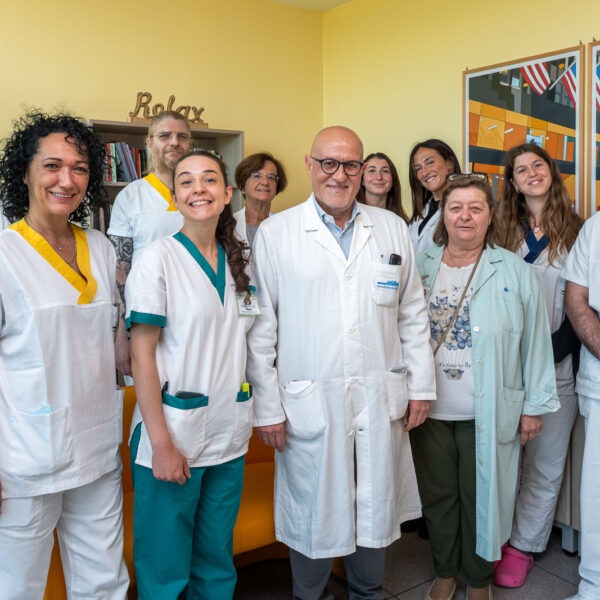
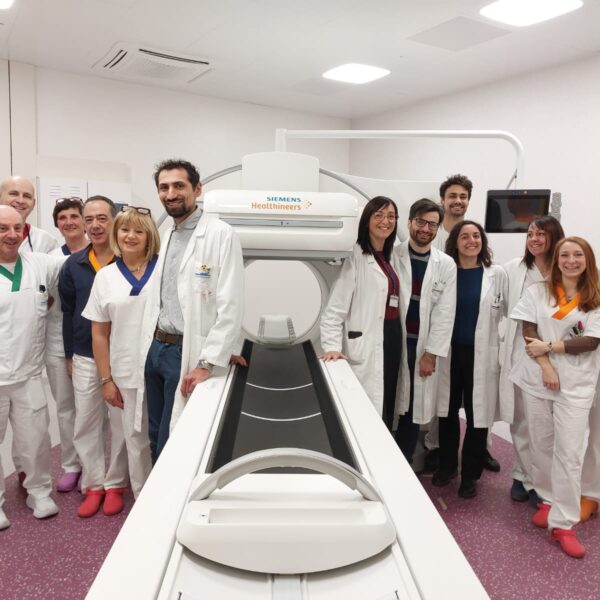
A center of excellence like INOC is not defined by a single specialist in sarcomas, but by the strength of an entire multidisciplinary team composed of surgeons, oncologists, radiologists, radiation oncologists, and pathologists. It is the consistent clinical practice of the entire team that ensures the correct diagnostic assessment and the determination of the most appropriate treatment strategies.
However, this network extends beyond the strictly clinical sphere. INOC welcomes patients from nearby areas as well as from other regions, and for this very reason has developed a support system that includes social services and volunteer services to address the practical needs of patients and their families, as well as psychological support, because a sarcoma diagnosis has a profound emotional impact, not just a physical one. Whenever possible, part of the treatment plan is coordinated with the centers closest to the patient’s home, reserving the most specialized treatments for the referral center.
Being a center of excellence doesn’t just mean treating the disease—it means building a support network around the patient that ranges from practical to psychological support, without ever leaving them alone.
When Clinical Research Comes into Play
One aspect that patients are often unaware of is the role of clinical trials. Not all patients with sarcoma need to participate in them: conventional treatments are the result of studies conducted as far back as twenty years ago and remain, for many forms of the disease, the most reliable choice.
When basic research opens up new therapeutic possibilities, a clinical trial can represent an additional opportunity that complements—rather than replaces—standard therapies. The INOC medical team evaluates, on a case-by-case basis, whether and when this opportunity is appropriate, based on the type of sarcoma and its presentation.
Participating in a clinical trial is never an obligation, but rather an additional opportunity: it allows patients to gain early access to innovative treatments and helps shape the standard of care for the future.
Life After Sarcoma
Contrary to popular belief, the term “sarcoma” encompasses a significant percentage of patients who can be cured and return to a completely normal life. Since every patient’s journey begins with the greatest hope, the medical team acts from the very start with a clear goal: to ensure that every patient has the potential to live as full and complete a life as possible.
The follow-up program at INOC is an integral part of this care: it begins immediately after diagnosis and includes key aspects such as fertility preservation in young patients and early initiation of rehabilitation. Subsequent checkups—initially more frequent and then gradually spaced out—are tailored to monitor the patient’s health, ensuring ongoing medical care even years after recovery.
Today, talking about recovery and overcoming the disease also means restoring true social dignity. Thanks to the recent passage of the law on the right to be forgotten in the context of cancer, those who have overcome the disease are no longer required to disclose their medical history in official and bureaucratic documents.