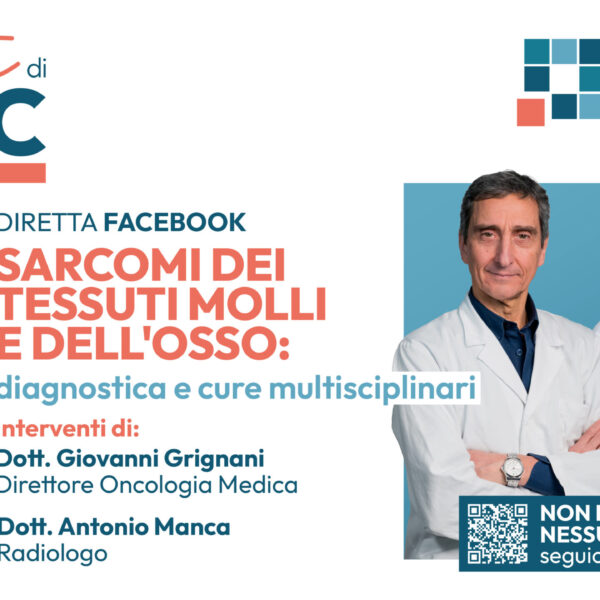
Soft Tissue and Bone Sarcomas: Recognizing and Treating Them
BY.

Dr.
John Grignani
Director of Medical Oncology
To understand what sarcomas, it may be helpful to start by looking at what they are not. The malignant tumors we know best—those that affect the stomach, intestines, lungs, and breast—originate in the specific tissues of those organs. Sarcomas, on the other hand, originate in the supporting structures that make up those organs: fatty tissue, muscle, blood vessels, andbone.
View profile
What are sarcomas, and how are they classified?
The name “sarcoma,” which means “flesh” in ancient Greek, is a general term used to describe more than 80 different types of cancer. Each of these different tumors has specific biological characteristics, distinct clinical behavior, and a different response to treatment. Depending on the normal tissue that the tumor most closely resembles, a sarcoma may be given different names. To name a few: liposarcoma if it resembles fatty tissue, osteosarcoma if it resembles bone tissue, and rhabdomyosarcoma if it resembles skeletal muscle. There are forms that bear no resemblance to their normal counterparts in the body, and in such cases, the disease is classified in various ways: sometimes it is named after the person who first identified it (Ewing sarcoma), and other times it has a purely descriptive name (gastrointestinal stromal tumor, also known as GIST).
Determining the type of sarcoma involved often requires, in addition to microscopic analysis, advanced DNA analysis techniques capable of identifying specific genetic alterations and, in some cases, predicting—at least in part—the response to treatment.
Where can sarcomas develop?
The limbs —arms, legs, and thighs—are the most common sites of occurrence. However, sarcomas can also involve the deep abdominal region, particularly the retroperitoneum, the space located behind the intestines. GISTs are typically localized in the stomach or intestines. There are also specific types of sarcoma that affect the head and neck region or deep structures such as the meninges.
In short, sarcomas do not have a specific site of origin: they can appear anywhere in the body, and for this very reason, they should never be ruled out from the outset.
Why is it so difficult to diagnose sarcoma early?
Early diagnosis of sarcomas is particularly difficult for two interrelated reasons:
- The first isthe absence of specific symptoms: a mass in the limbs or abdomen may be mistaken for the result of an injury, and bone pain may be mistaken for a joint problem related to sports or osteoarthritis;
- The second reason is the rarity of these cancers themselves. Their incidence is 10 to 100 times lower than that of more common cancers. This makes it difficult even for an experienced physician to immediately consider this diagnosis.
Even the most attentive doctor may have trouble recognizing a sarcoma when faced with a symptom that, statistically speaking, almost always has another explanation. When suspicion arises, consulting a specialized center is the most important step: only those who see these tumors regularly know how to recognize and diagnose them correctly.
When should you become suspicious and contact a referral center?
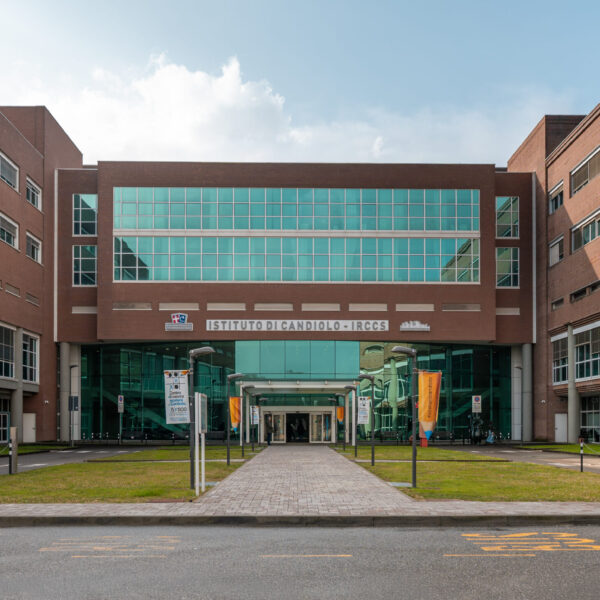
There are certain concrete signs that should not be underestimated, either by the patient or by the primary care physician. A superficial lesion growing larger than 5 centimeters requires further evaluation at a specialized center; the same applies to deep masses larger than 3 centimeters. Once a suspicion has been raised, the most important decision is not to rush, but to identify a center with specific expertise in the diagnosis and treatment of these diseases. Sarcomas, in fact, require clinical and radiological evaluation, as well as medical, surgical, and/or radiation therapy options, which only a multidisciplinary team with specific expertise can provide. In our region, INOC—the National Oncology Institute of Candiolo —has been committed for years to the diagnosis and treatment of these cancers. INOC is part of a national and international network that collaborates on research and treatment initiatives to defeat these cancers.
The initial treatment strategy often determines the entire course of the disease: choosing the right center right from the start is not just an extra precaution, but a crucial step in designing the overall treatment strategy.
What are the treatment approaches for sarcomas?
Surgery remains the cornerstone of treatment: it must be complete, with removal of the tumor without any residual microscopic margins, and is the prerequisite for a cure. Depending on the histotype and location, complementary therapies such as radiation therapy or medical treatments may be necessary.
In forms that develop in childhood or adolescence, such as osteosarcoma or Ewing’s sarcoma, chemotherapy continues to play a central role. In other forms, such as GIST, molecularly targeted therapies —oral medications that selectively inhibit specific proteins in cancer cells—have radically changed the prognosis, with results that were unthinkable even a decade ago. Knowledge in this field is constantly evolving, driven by ongoing collaboration among specialized centers.
In summary, there is no single approach that works for all sarcomas: the choice of treatment depends on the histotype, the location, the patient’s age, and the tumor’s specific molecular characteristics.
Is it possible to recover from a sarcoma?
The word “sarcoma” is often associated with a great deal of fear, but a significant proportion of patients can actually be cured and return to a completely normal life. For patients with tumors that cannot be surgically removed or with metastatic disease at diagnosis, the goal of treatment becomes chronic management: keeping the disease under control, halting its progression, and ensuring the best possible quality of life given their clinical condition. This is achieved by alternating periods of active therapy with phases of surveillance, integrating various disciplines: radiation therapy, interventional radiology, chemotherapy, molecularly targeted therapies, and, in selected cases, immunotherapy.
Throughout this process, an ongoing relationship between the patient and the medical team is essential: it is often the information provided by the patient that allows the treatment strategy to be adjusted in response to the progression of the disease.
How is the post-treatment follow-up process structured?
The focus on quality of life must begin at the very moment of diagnosis. For young patients, it is essential to take immediate action to preserve their quality of life: this includes fertility preservation —at INOC, this is done in collaboration with the Turin Fertility Center—and a particular focus on initiating rehabilitation as early as possible after surgery and throughout treatment.
The monitoring process consists of two phases:
- In the early stages, when the risk of sarcoma recurrence is highest, follow-up visits are frequent and tailored to the histological type and location of the disease;
- As time passes and the risk decreases, the intervals gradually become longer.
Even after follow-up visits end, however, patients should not feel abandoned: physical, emotional, or psychological side effects can arise even years after treatment, and the referral center must remain a point of contact that is always available.