Thyroid: Is Surgery Always the First Choice?
BY.
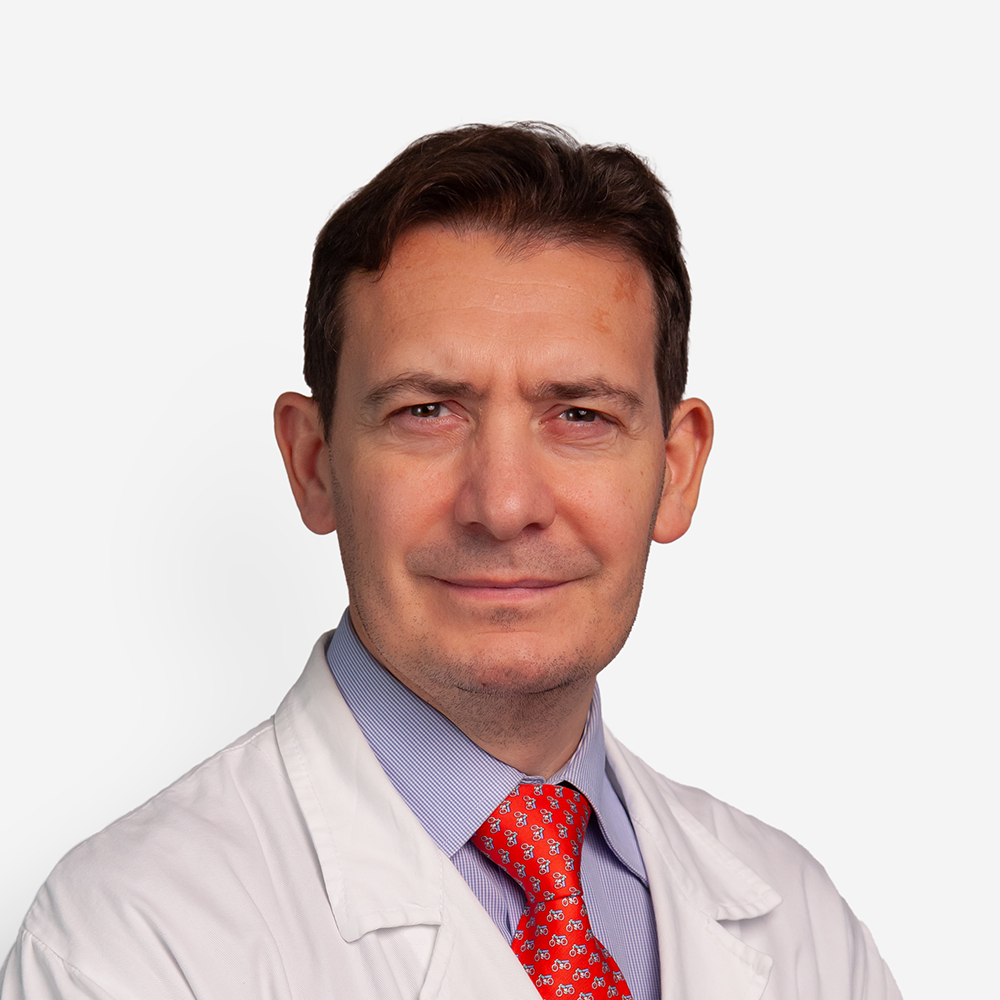
Dr.
Stephen Bondi
Director of Otolaryngology
Dealing with a thyroid problem often raises many doubts, especially when the possibility of surgery comes up. The question we hear most often in the clinic is:“Doctor, do I really have to have surgery?” The answer is: not always. Today, surgery is a deliberate, personalized choice supported by cutting-edge technologies that allow us to intervene only when strictly necessary.
Visit profile
When is thyroid surgery really necessary?
The decision to perform thyroid surgery is never arbitrary; it is based on rigorous clinical criteria. In general, surgery is indicated in the following cases:
- presence of a malignant or highly suspicious thyroid nodule on fine-needle aspiration;
- a very large gland that causes compression (difficulty breathing or swallowing);
- Refractory hyperthyroidism that no longer responds to drug therapy.
Thyroid surgery is generally anelective procedure that can be scheduled in advance; emergency surgery is a very rare exception.
Surgery, therefore, is almost never a necessary step: it is performed only when the health benefits outweigh the option of simply monitoring the condition over time.
What factors influence the decision to operate on a thyroid nodule?
In addition to the clinical criteria already mentioned, the decision to perform surgery on the patient is guided by the results of the fine-needle aspiration, which determines the nature of the cells in the nodule. Precisely because risk assessment is never immediate, the evaluation is entrusted to a multidisciplinary team. This group of experts—comprising an endocrinologist, a surgeon, a pathologist, and a nuclear medicine physician—cross-references clinical, ultrasound, and cytological data.
This ongoing comparison allows us to:
- avoid unnecessary interventions in cases of benign or very low-risk nodules;
- tailor the treatment strategy by choosing between a total or partial thyroidectomy;
- to ensure the highest level of safety by integrating diagnostic expertise with the technical skills required in the operating room.
The multidisciplinary approach transforms surgery from a technical procedure into a shared decision, placing the patient’s safety and well-being at the center of every decision.
Are there any real alternatives to surgery?
For many small tumors (<1 cm), active surveillance is a viable option that has already been tried in some Asian countries. This is a rigorous clinical approach that involves closely monitoring the tumor through periodic clinical and ultrasound examinations, delaying surgery or avoiding it altogether if the condition remains stable.
Instead of removing the tumor immediately, a protocol of targeted monitoring is followed, which allows for intervention only if and when the disease shows signs of progression. To avoid surgery, it is essential that the patient meet specific safety criteria; in these cases, conservative management involves serial ultrasound scans.
When is a total thyroidectomy necessary?
A total thyroidectomy is performed when the condition affects the entire gland, such as in cases of large goiters or larger tumors. Total thyroidectomy differs from hemithyroidectomy, which involves the removal of only one half of the gland. When the entire thyroid is removed, the patient must begin hormone replacement therapy to compensate for the loss of the gland.
In short, removing only half of the thyroid gland preserves natural hormonal function and can prevent the need for lifelong medication.
What are the least invasive surgical techniques available today?
Technological advances have introduced several minimally invasive treatment options for thyroid conditions. For the treatment of benign conditions, there are minimally invasive thermal ablation techniques. The most commonly used are radiofrequency and laser; from a surgical standpoint, one can opt instead for a minimally invasive approach that involves a 2–3 cm skin incision and the use of endoscopes to perform the procedure.
These options ensure therapeutic efficacy comparable to that of traditional surgery, while offering patients significantly faster recovery times; however, the indications are restrictive and limited primarily to benign conditions.
How does robotic thyroid surgery work?
Robotic thyroid surgery is a procedure that was developed in Asian countries, particularly in South Korea, to address the cultural need to avoid visible scars on the neck, which are considered a social stigma, especially among young women. In addition, this technology offers significant advantages, such as 3D visualization, which allows for image magnification and greater surgical precision.
The true value of robotic technology lies in its ability to combine extreme precision with minimal invasiveness.
What are the risks and complications of thyroid surgery?
It is important to be aware of the risks associated with thyroid surgery. Possible complications of a thyroidectomy include:
- weakening of the vocal nerves (laryngeal nerves), which may cause changes in the pitch or volume of the voice immediately after surgery;
- hypoparathyroidism, which is a drop in blood calcium levels caused by surgical stress on the parathyroid glands; this condition may be temporary or (rarely) permanent;
- risk of bleeding or routine anesthesiological complications.
Discussing these issues openly with your surgeon allows you to approach the surgery with greater awareness, knowing that most of these complications are now preventable or manageable.
How can you prevent a scar on your neck after thyroid surgery?
Today, it is possible to undergo thyroid surgery without leaving visible scars on the neck. The desire to avoid scarring is an increasingly common request, to which the medical field is responding with cutting-edge techniques such as transaxillary thyroidectomy or transoralthyroidectomy, made possible by the use of robotic and laparoscopic surgery.
The use of the robotic system allows for surgery through hidden access points (the armpit or mouth) with superior precision and three-dimensional visualization, ensuring the resolution of the condition while preserving the aesthetic integrity of the neck. These approaches offer customized solutions that ensure maximum privacy for the patient and a rapid return to daily life, eliminating the typical scar associated with traditional surgery.
Aesthetics are important, but safety comes first. It’s a good idea to consult with your surgeon to determine whether these innovative techniques are suitable for your specific case, ensuring the best possible outcome—both aesthetic and, above all, clinical.
When can you return to your normal life after thyroid surgery?
The postoperative recovery is generally quick and relatively comfortable. Most patients return to work about two weeks after thyroid surgery, during which time they can also gradually resume physical activity. In general, recovery after a thyroidectomy is not painful, allowing patients to return to their daily routines in a short period of time.
In short: It is advisable to plan for a break of about two weeks, after which you can return to your normal family and work routines in complete comfort.
What follow-up tests are needed after thyroid surgery?
Follow-up visits after a thyroidectomy are essential. Regular follow-up after thyroid surgery includes:
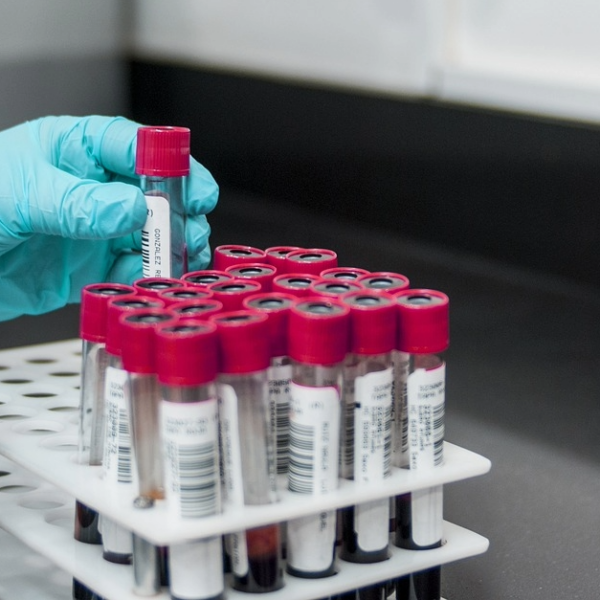
- blood tests: measurement of TSH, FT3, FT4, and thyroglobulin (the latter only in cases of malignant disease);
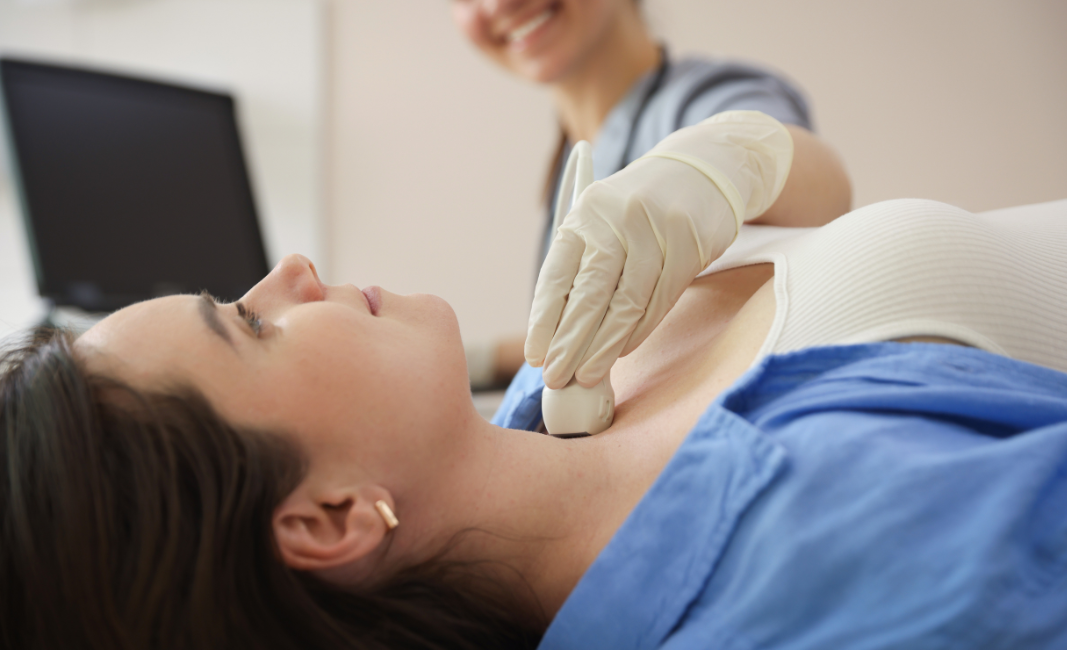
- Neck ultrasound: to monitor the area where surgery was performed;
- Endocrinology appointments: to adjust hormone replacement therapy.
Proper post-thyroidectomy monitoring ensures that there are no recurrences and that metabolic health is maintained.
Blood tests are essential for ensuring that hormone replacement therapy is always perfectly balanced.
In conclusion, the decision to undergo surgery must be guided by the understanding that there is no “standard” procedure, but rather a strategy tailored to the individual patient. Relying on a specialized center such as INOC—the National Oncology Institute of Candiolo—provides access to techniques that preserve both the health of the